Blue Plaque to Pioneering Mathematician, Mary Cartwright, at her former home in Cambridge
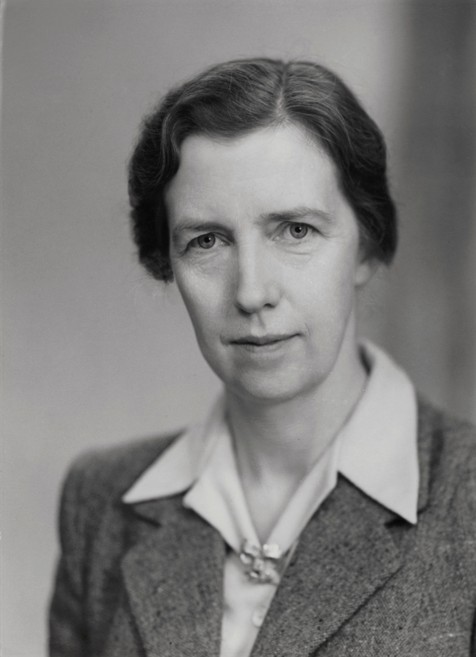
Today (Friday 12 June), Historic England is unveiling a national blue plaque to Dame Mary Cartwright, one of the most eminent British mathematicians of the 20th century, at her former home in Cambridge
Cartwright (1900–1998) was a trailblazing mathematician whose work helped lay the foundations of chaos theory
She was the first woman mathematician elected a Fellow of the Royal Society and the first woman to serve as President of the London Mathematical Society
Alongside Ancestry, the global leader in family history, Historic England is celebrating Mary Cartwright as an influential woman of the 20th century
The plaque will be installed at 38 Sherlock Close, where Cartwright lived for more than two decades and continued her research following her retirement from Cambridge University
Today (Friday 12 June), Historic England unveils a national blue plaque to Dame Mary Cartwright at 38 Sherlock Close, Cambridge, her home from the early 1970s until the final years of her life. Cartwright was a mathematician of exceptional originality whose work transformed understanding of complex and unpredictable systems, laying the foundations for what would become chaos theory.
The inscription on the plaque reads:
DAME MARY
CARTWRIGHT
1900–1998
Mathematician
lived here
Born in 1900, Mary Lucy Cartwright built an impressive academic career at a time when women were largely excluded from the upper ranks of mathematics. She became the first woman to graduate from the University of Oxford with a first-class degree in mathematics and went on to enjoy a long association with Girton College, Cambridge, where she served as Mistress from 1949 to 1968, the longest‑serving head in the college’s history.
Mathematics – chaos theory
Mary Cartwright worked in both theoretical and applied mathematics, she is best known for her work on equations used to describe systems that change over time.
During the Second World War, she worked with the leading mathematician, J. E. Littlewood, on problems linked to radar, where electronic signals were behaving in unexpected ways. They showed that the problem was not faulty equipment, but that some systems do not behave in neat or predictable ways, and that small changes can lead to very different outcomes. This helped to lay the foundations of chaos theory, which explains why complex systems, such as the weather or electronic signals, can be difficult to predict even when the basic rules are known. This work contributed to more effective early-warning systems, which were crucial in battles such as the Battle of Britain.
Although the full significance of this research was not immediately recognised, Cartwright lived to see her work, from the 1930s and 1940s, acknowledged as foundational to a major branch of modern mathematics. Her influence extended internationally, shaping generations of mathematicians and encouraging a more open exchange between pure and applied approaches.
Teaching – Girton College
Alongside her research, Cartwright played a crucial role as an academic leader and mentor. At the time, Girton was a women’s college, and Cartwright was teaching at a moment when women were still fighting for equal recognition in universities. As a lecturer and director of studies, Cartwright helped guide students through a demanding subject, often working one‑to‑one or in small groups.
She believed that mathematics should be understood, not just memorised, and encouraged students to think deeply and independently. In 1949, she became Mistress of Girton College, a role that combined teaching with leadership. She oversaw teaching standards, supported students and staff, and helped shape the college during a period of major change for women in higher education.
Cartwright was widely honoured during her lifetime. She was the first woman mathematician elected a Fellow of the Royal Society in 1947, the first woman to receive its Sylvester Medal, and the first woman to serve on its council. In 1969, she was appointed Dame Commander of the Order of the British Empire. She also received numerous honorary degrees and remained an influential figure in British and international mathematics well into retirement.
A national blue plaque at her former home
38 Sherlock Close reflects Cartwright’s later life and working habits. From this Cambridge flat, she continued to write and research, listing the address on academic papers and correspondence throughout the 1970s and 1980s. Its proximity to Girton College places the plaque firmly within the landscape of her intellectual life.
This plaque, as part of Historic England’s National Blue Plaque Scheme, complements those that are already in Cambridge. Cambridge & District Blue Plaques mark the people and events that have shaped the city and surrounding villages, making history visible in the streets where it happened. Run by local charity Cambridge Past, Present & Future, the scheme recognises contribution, context and connection, helping residents and visitors see Cambridge with fresh eyes. The unveiling of this blue plaque to Mary Cartwright coincides with Historic England’s partnership with Ancestry, the global leader in family history. Together, Historic England and Ancestry are celebrating inspirational women listed in the 1921 Census of England and Wales, uncovering hidden stories.