National Blue Plaque unveiled to Palaeontologist and Archaeozoologist Dorothea Bate
National blue plaque unveiled today to palaeontologist Dorothea Bate at the Natural History Museum in Tring, Hertfordshire
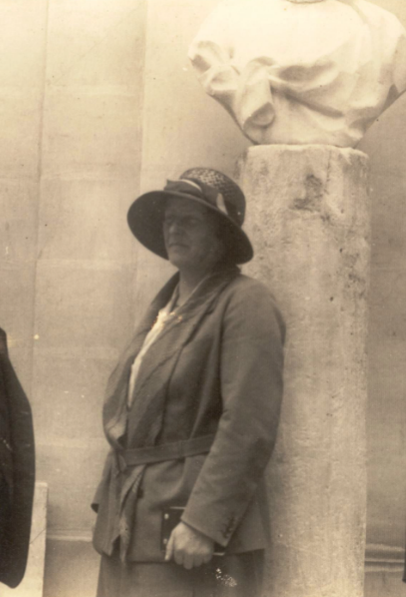
Bate (1878-1951) was one of Britain’s leading fossil hunters, discovering extinct species across the Mediterranean and helping to establish the foundations of modern archaeozoology
Today (7 September 2026), Historic England unveils a national blue plaque to Dorothea Bate at the Natural History Museum at Tring, Hertfordshire. Bate (1878-1951) was one of Britain’s leading fossil hunters, discovering extinct species across the Mediterranean and helping to establish the foundations of modern archaeozoology.
Not only was Bate an extraordinary scientist, but she was a pioneer for women in the field, being one of the first women to be employed by the Natural History Museum.
Her discoveries reshaped our understanding of prehistoric animals and the relationship between ancient environments, animals, and people.
The inscription on the plaque reads:
DOROTHEA BATE
1878–1951
Palaeontologist
Officer-in-Charge
of this museum
from 1948
Early Life and Career
Born in Carmarthen, Wales, in 1878, Dorothea Bate developed a fascination with the natural world from an early age. After moving with her family to rural Gloucestershire as a young woman, she spent hours exploring the surrounding countryside and caves, collecting fossils. She had little formal education, instead largely teaching herself through observation, research and fieldwork, developing the skills that laid the groundwork for her future scientific career.
To further understand her collection, in 1900 she travelled to the Natural History Museum in London and asked for work behind the scenes. Her determination impressed museum staff, earning her a position as an assistant and beginning an association with the institution that would last more than fifty years. She published her first scientific paper just a year later in 1901, ‘A short account of a bone cave in the Carboniferous limestone of the Wye Valley’.
Excavations Abroad
Bate went on to undertake expeditions across the Mediterranean, often travelling alone to remote caves in search of evidence of ancient life. In Cyprus, she discovered a previously unknown species of dwarf elephant, and in 1909, while in the Balearics, she discovered the Myotragus, an extinct goat-like antelope.
She would travel through rough and inhospitable terrain, often wading through mud and water with her basic toolkit of hammer, nets and boxes, to reach remote caves where she collected fossils and bones.
Later in her career, Bate worked alongside archaeologists, examining animal bones recovered from ancient cave sites. By studying changes in animal populations over thousands of years, she helped reveal how shifts in climate affected both wildlife and early human communities. This approach helped create what is now known as archaeozoology.
The Natural History Museum at Tring
During the Second World War, Bate was transferred to the Natural History Museum at Tring. In 1948, she was appointed Officer-in-Charge, becoming responsible for the management and display of the museum’s collections. Although suffering from poor health, she continued to support archaeologists and scientists around the world with her expertise, while overseeing the museum during an important period in its development.
Bate achieved more than 80 published scientific papers, despite spending most of her career without a permanent paid position. Her expertise earned the respect of leading scientists, and her work continues to influence researchers today.
QUOTES
Claudia Kenyatta and Emma Squire, co-CEOs Historic England, said: “Dorothea Bate’s life was defined by her intense curiosity and desire to understand the natural world. She used this drive to make sense of ancient life through fragments of bone, bringing it to life once again. Her research transformed our understanding of prehistoric animals and ancient environments.
“Not only does her work continue to be invaluable in the field that she helped to establish, but as one of the first women to be employed by the Natural History Museum she was instrumental in paving the way for future women in science. This plaque ensures that her pioneering contributions to science receives the wider recognition it deserves.”
Heritage Minister Baroness Twycross said: “Dorothea’s achievements helped break through the glass ceiling and paved the way for women in palaeontology. We have so much to thank Dorothea for, and her story still inspires us today.
“This blue plaque pays tribute to Dorothea, and I hope will encourage everyone in the community to believe that their own passions and talent can make a difference.”
Samira Ahmed, journalist, broadcaster and National Blue Plaques Scheme Panelist, said: “Fossils still captivate us today, and we owe a huge debt to Dorothea Bate, a brilliant woman of science, who defied the barriers put in her way, to pursue her passion for paleontology and bring so much knowledge to light.”
Dr Sandra Knapp, Director of Research at the Natural History Museum, said: “The role of women scientists in natural history is often hidden – but Dorothea Bate’s work with fossil mammals was both innovative and set a path for others, despite obstacles.”
“The installation of this plaque not only honours her but also serves as a reminder that women have been, and continue to be, key contributors to our understanding of the natural world.”
Karolyn Schindler, Dorothea Bate’s biographer and a Scientific Associate of the Natural History Museum, said: “It’s wonderful that Dorothea Bate, an exceptional scientist and explorer, is today being honoured at the Natural History Museum at Tring with a national blue plaque from Historic England. It is so richly deserved! She was a fearless fossil-hunter, and one of the first women ever to work at the Natural History Museum in South Kensington.
“From 1901, when she was just 22, to 1911, Dorothea explored the Mediterranean islands of Cyprus, Crete and the Balearics. In remote mountain caves and sea-battered cliffs, she discovered, against enormous odds, the fossilised remains of tiny hippos, elephants, the smallest mammoth ever discovered, and a curious little goat-like antelope unique to the Balearics. Her magnificent discoveries are now looked after by the Natural History Museum.
“By the end of her life, Dorothea was internationally respected as an outstanding scientist by palaeontologists and archaeologists in many parts of the world. Her importance lives on through her papers and fossil collections, still the focus today of new and innovative research.”
Funding Acknowledgement
We give special thanks to Delancey Real Estate for their generous support of Historic England’s National Blue Plaque Scheme.