Stage Set for £10bn Transformation of Earls Court as Plans Are Fully Backed by Local Boroughs
On 16 December, the Planning Committee of the Royal Borough of Kensington & Chelsea passed a resolution to grant planning permission for the transformation of Central London’s largest cleared development site. This follows unanimous approval by the London Borough of Hammersmith & Fulham’s Planning Committee on 26 November.
The Earls Court Development Company (ECDC) – founded by Delancey and APG – is responsible for the transformation of the 44 acre area on behalf of the Earls Court Partnership Limited – a joint venture between Delancey (on behalf of its client funds) and the Dutch pension fund manager, APG, and Places for London, Transport for London’s property company.
The Earls Court Partnership Limited initially acquired the site in December 2019, and in 2022 subsequently secured control of the adjoining TFL Lillie Bridge Depot and associated land, that forms part of this masterplan.
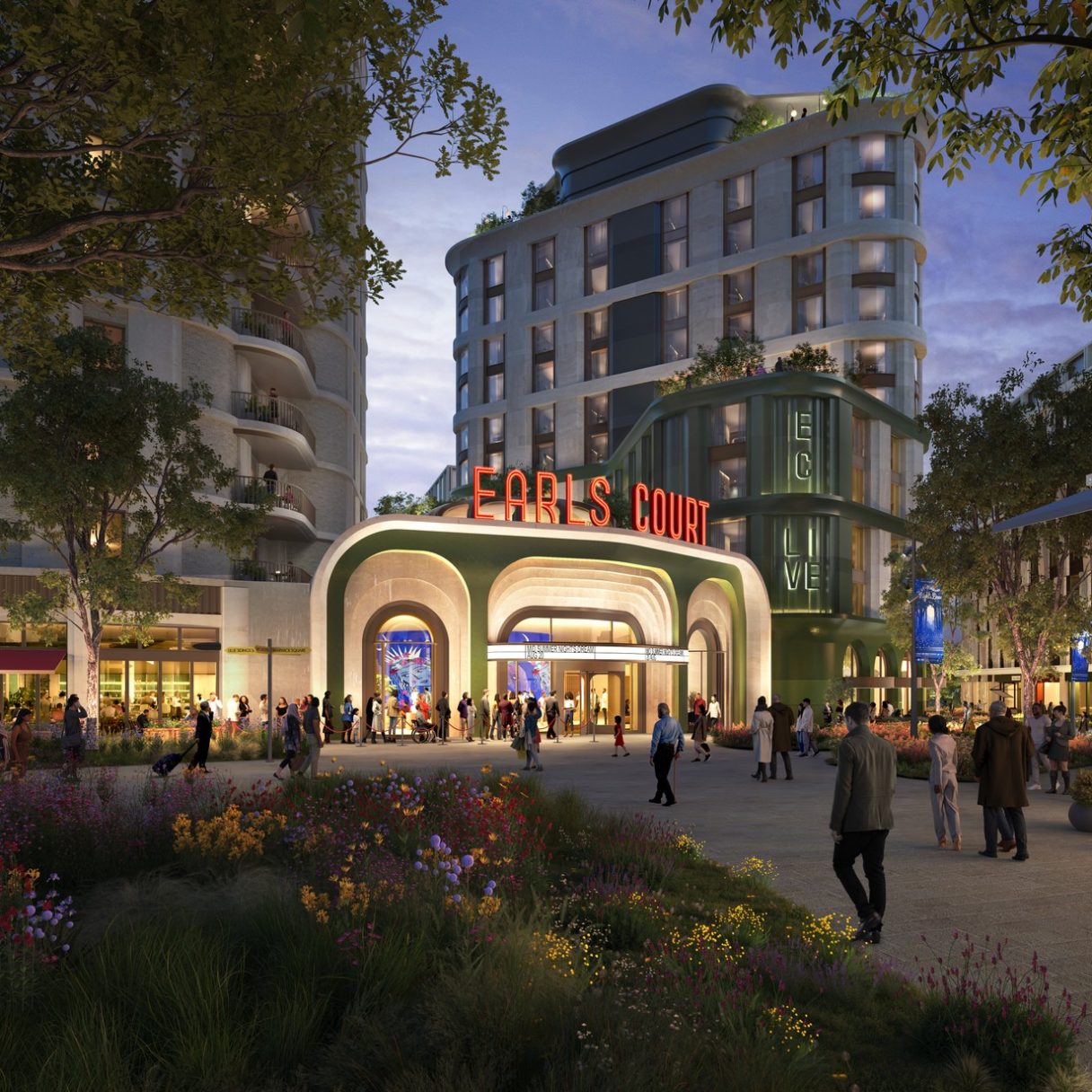
Delivering 23,500 jobs across the UK and injecting £3bn per annum into the UK economy, the long empty site is now set to become an inclusive new neighbourhood with c.4,000 homes, leisure and cultural venues, located within 20 acres of public realm and green space.
Earls Court will be a showcase for sustainability with 2.5 million sq ft of workspace and 12,000 jobs on site focused on the climate innovation sector. This will contribute towards the London Growth Plan and Hammersmith & Fulham’s Industrial Strategy, Upstream London. The development has climate resilience at its core with over 1,000 trees planted, a zero-carbon energy network and a zero operational carbon target from day one.
With a resolution to grant planning permission received from both boroughs, the impetus is now on collaboration between the public and private sector to facilitate delivery at pace to bring forward the first 1,300 homes within Phase One.
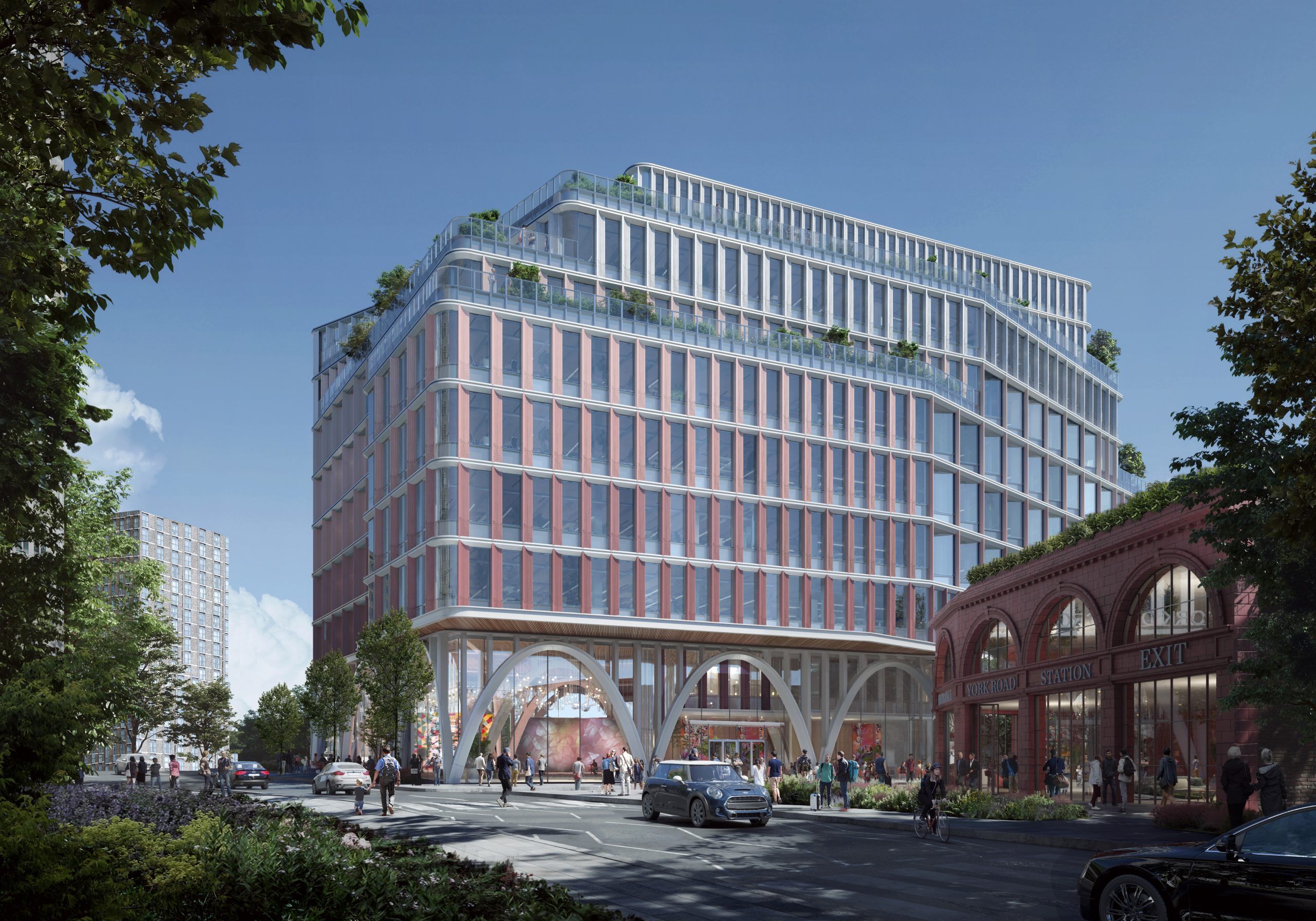
Those moving into the well-connected development will benefit from three Tube stations on their doorstep, London Overground services, as well as several bus routes, allowing residents and visitors to travel around the local area and further afield with ease. The community will also benefit from new east-west and north-south routes through the site for pedestrians and cyclists.
The vision for Earls Court to once again become London’s place to ‘Discover Wonder’ is set to become a reality after the £10bn masterplan was approved at Planning Committees in both Hammersmith & Fulham and Kensington & Chelsea. Bringing c.4,000 homes, cultural venues, an innovation ecosystem and leisure located within 20 acres of landscaped public realm and green space, the new neighbourhood at Earls Court will generate 23,500 jobs and inject £3bn/annum into the UK economy.
Earls Court is a development of global significance; its successful delivery will send a clear signal to the domestic and international investment sector of the commitment of the UK government at every level to support housing and economic growth. ECDC submitted hybrid planning applications in 2024 to each borough, with permission sought in outline for the illustrative masterplan, and in detail for six buildings forming the first phase of the development. With the resolution to grant permission secured from both boroughs, ECDC can now turn to mobilising for delivery of the first buildings at pace. There will be a focus on maintaining a collaborative partnership between the public and private sector to accelerate delivery of new homes and public green space.
Rob Heasman, Chief Executive of ECDC, said:
“Our plans will restore Earls Court as a global destination, a place for ingenuity, for the extraordinary, and for people to wonder.
“Projects of this scale require ambition, partnership and patience to bring forward, and our ambition has been shaped by four years of engagement, listening and working in collaboration with our community.
“I want to thank all our stakeholders for their support throughout this process, and to recognise the exceptional work of our world-class team. Our focus will now turn firmly to delivery, working collectively with the public sector to secure the range of homes, jobs and public benefits which this site can deliver for London and the UK. Earls Court will be the next chapter in London’s evolving story.”
Jamie Ritblat, Founder and Executive Chairman of Delancey, said:
“This is a hugely important milestone. Earls Court will be a beacon for the capital’s future as a leading global city. It will create 23,500 jobs across the country, a new centre for the UK’s climate innovation sector, c.4,000 new homes and benefit the UK economy by £3 billion per year.
Three new cultural venues will reinstate Earls Court as a destination people gravitate to for unparalleled performance and experiences, and the social and economic impact will be felt strongly throughout the local economies.
We look forward to continuing to engage with both our local Boroughs, with the Mayor of London’s office and the Government to ensure that these significant benefits can quickly come forward.”
Graeme Craig, Director and Chief Executive of Places for London, said:
“This is a unique project and the very definition of connected brownfield land which can deliver on the priorities of London’s future. It is a fine example of the active role that Places for London plays in helping to shape the future of our great city.
“We’re proud to have been part of bringing this masterplan to life, using TfL’s land to bring about this development. We’re already helping to train the next generation of construction workers through the training facilities created at Earls Court and now we’ll look forward to getting started on site and delivering the homes London urgently needs.”
Rafael Torres-Villalba, Director European Real Estate for APG, said:
“It is great to see the scale of our ambition being backed through the planning process; very proud of being part of this urban regeneration project in the heart of the city and building a next generation sustainable part of London, while providing annually £3billion of GVA to the UK economy”
The masterplan has been shaped by over four years of extensive engagement and co-design with local residents, business and community groups, ensuring that the future of Earls Court reflects the priorities of those who know the area best. With c.4,000 homes, including affordable, the development will pilot innovative approaches to housing to address a range of London’s housing needs, such as a new tenure aimed at supporting the ‘squeezed middle’.
ECDC has assembled a group of architecture practices with a proven track record in successfully delivering new communities that are stitched into the surrounding neighbourhoods. Masterplan architects Hawkins\Brown and Studio Egret West, with SLA working alongside Studio Egret West on the landscape architecture, designed Earls Court as a neighbourhood set for the 22nd Century. Architects Sheppard Robson, Serie, Maccreanor Lavington, and dRMM have worked on the designs submitted for buildings in detail, whilst EPR, ACME and Haworth Tompkins have designed buildings in outline. ZCD Architects have helped ECDC set up a Public Realm Inclusivity Panel, involving people across a range of ages and access needs, to inform and shape the design of the public realm. Designed in proportion with surrounding communities, the plans create new residential crescents in-keeping with the local urban fabric with taller buildings clustered close to the existing Empress State Building. The tallest building in the cluster, designed by Sheppard Robson, reaches 42 storeys and stands as a proud landmark that reshapes the west London skyline.
Celebrating the site’s incredible legacy of performance and ingenuity, Earls Court will be home to three new world-class cultural venues, as well as a range of diverse spaces, fixed and pop-up venues and retail, dining and leisure spaces.
Sustainability is embedded throughout. Landscape architects, SLA and Studio Egret West, have designed a climate-resilient approach to the 20 acres of public realm and green space, including planting over 1,000 new trees and an 85% uplift in biodiversity. A zero-carbon energy network and a zero operational carbon target from first occupation will underpin the entire district.
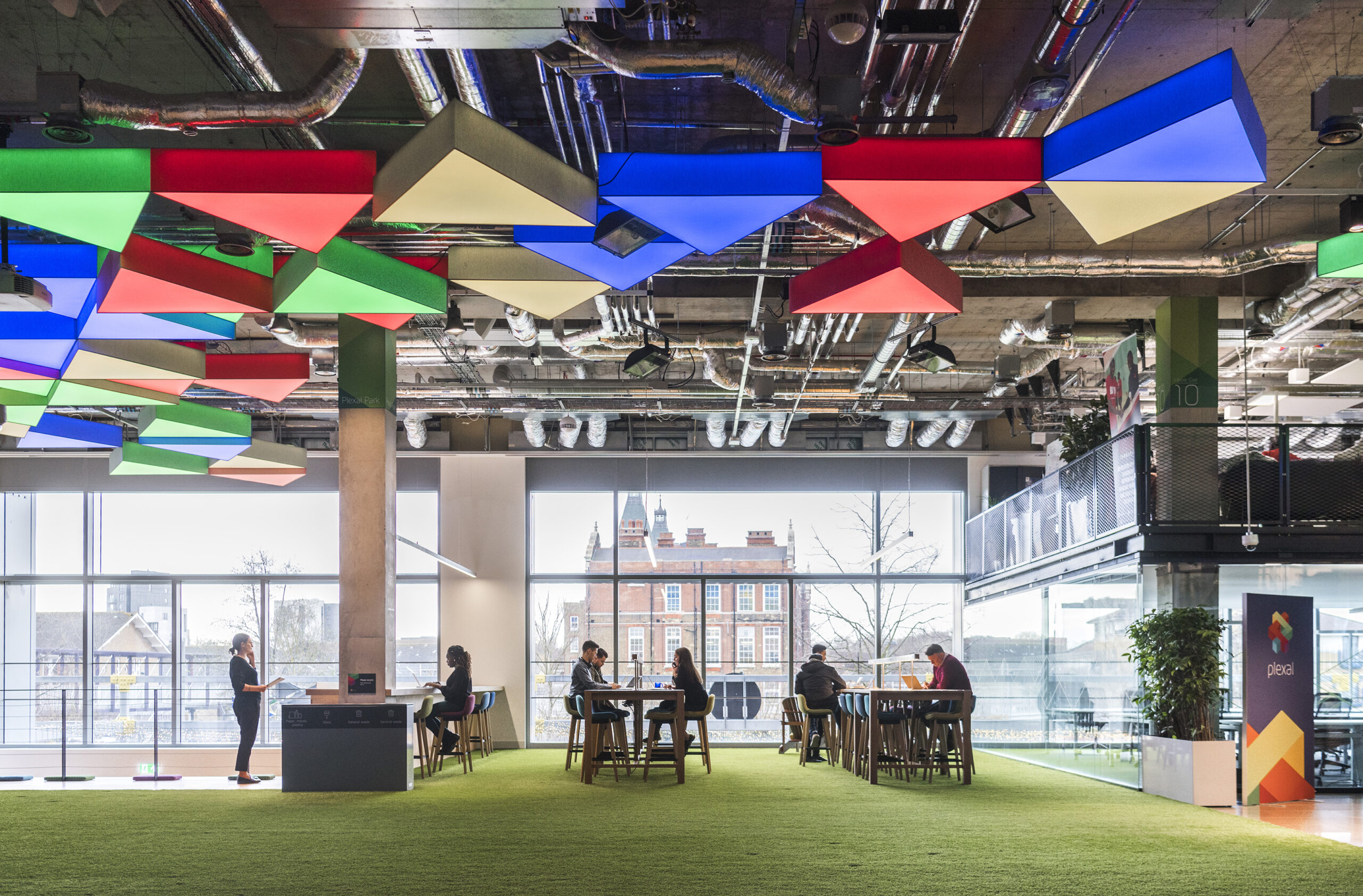
Earls Court will also become one of the UK’s most important centres for climate innovation. The masterplan includes 2.5 million sq ft of workspace, supporting start ups, scale ups, the creative industries and global firms, and delivering around 12,000 on-site jobs.
With detailed permission secured for the first phase, early construction work is expected to begin in 2026. Once complete, this nationally significant project will contribute £3bn a year to the UK economy and support 23,500 jobs across the country.